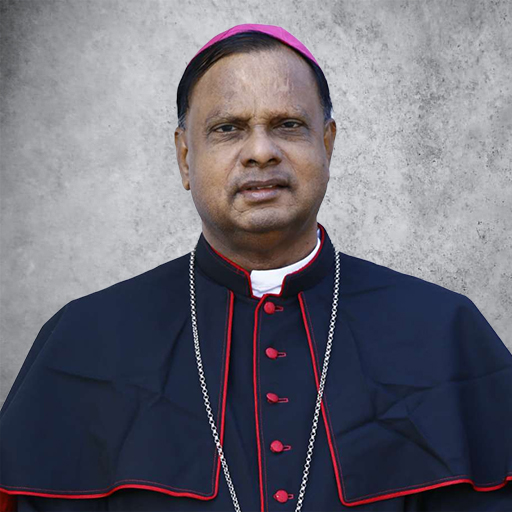
Archdiocese of Verapoly was established on September 1, 1886 by promulgation of the famous apostolic letter “Humanae Salutis Auctor” by Pope Leo XIII. The Archdiocese of Verapoly was originally known as the “Apostolic Vicariate of Malabar”. It has its origins in 1657, with the arrival of Carmelite Missionaries, most prominent among whom was Father Joseph of St. Mary, better known as Joseph Sebastiani. They had been deputed by Pope Alexander VII to effect reconciliation of St. Thomas Christians of the Syro – Chaldaic Rite, who had seceded from their Archbishop forsaking his authority by taking an oath for that purpose at the foot of a cross – thereafter called the ‘Coonen Cross’ situated in Mattancherry, had illegally made their Archdeacon the Archbishop by going through a farcical ceremony.
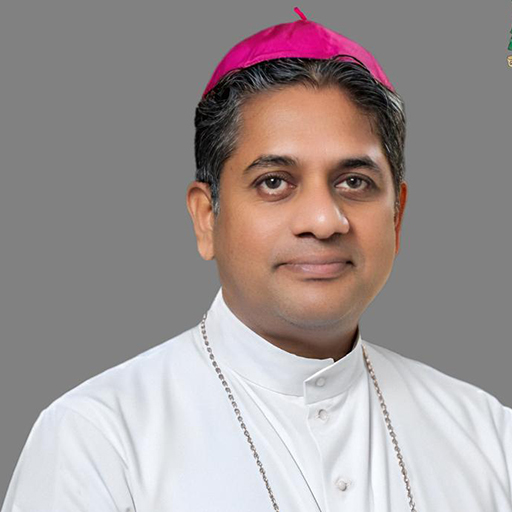
By the Brief “Quod Jam Pridem”, of Pope Leo XIII, dated May 20, 1887, the Syrians were exempted from the jurisdiction of the Archdiocese of Verapoly and the two Vicariates of Trichur and Kottayam were erected with Dr. Adolpus E. Medlycott and Dr. Charles Lavigne as their Vicars Apostolic. Thus the Archdiocese of Verapoly came to consist exclusively of the Catholics of the Roman Rite. Dr. Joseph Kalathiparambil was appointed as the Archbishop of Verapoly by His Holiness Pope Francis on October 31, 2016. His formal installation as Archbishop of the Archdiocese of Verapoly took place on December 18, 2016.
The diocese was erected and constituted a suffragan of the Diocese of Goa, of which it had previously formed a part, by the Bull “Pro excellenti praeeminentia” of Paul IV, 4 February, 1557 (cf. Bullarium Patronatus Portugalliae Regum, I, 193). It was later reorganized according to the Concordat of 23 June, 1886, between Leo XIII and King Luiz of Portugal and the Constitution “Humanae Salutis Auctor” of the same pope, 1 September, 1886. It is suffragan to the patriarchal See of Goa (cf. Julio Biker, Collecçao de Tractados, XIV, 112-437). The diocese consists of two strips of territory along the sea-coast, the first about fifty miles long, by eight in its broadest part, the second thirty miles in length. There are two important towns, Cochin and Alleppi (Alapalli) in which the higher educational and charitable institutions of the diocese are situated. The present and 36th Bishop is Dr Antony Kattiparambil.
By the Papal Bull “Que Aptius” dated 3rd July 1987, the Diocese of Kottapuram was erected and the solemn declaration of the same was made on 1st August 1987. His Excellency Rt. Rev. Dr. Francis Kallarakkal was appointed the First Bishop of the diocese by the Apostolic Letter “Romani et Pontificis” dated 3rd July 1987. Together with the Episcopal Ordination of the Bishop elect Dr. Francis Kallarakkal, on the feast day of St. Francis Assisi, the Diocese of Kottapuram was officially inaugurated on October 4, 1987. The Diocese of Kottapuram lies in the civil districts of Ernakulam, Trichur, Malappuram and Palakkad of Kerala State. It has its head-quarters at Kottapuram near the ancient city of Cranganore. It has a population of about 96,950 Latin Catholics. The area of the diocese is 3300 sq. km. The patron saint of the diocese of Kottapuram is St. Thomas, the First Apostle of India. Pope Francis appointed Bishop Alex Joseph Vadakumthala, Bishop of Kannur as the Apostolic Administrator of the Diocese of Kottapuram on May 1 after accepting the resignation of Most Rev. Joseph Karikkassery.
The apostolic bull ” Ad Chisti Nomen” of His Holiness Pope Pius Xl to be bifurcated the Archdiocese of Verapoly on 14th July 1930 and erected the Diocese of Vijayapuram. This Diocese is at the centre of Kottayam municipal Town. A Catholic diocese named ‘Kottayam’ was existing since 1887. So the founding fathers of the new diocese have decided to name, it as ‘Vijayapuram’. The name seemed perfect as it occupies the centre of Vijayapuram Panchayath, Kottayam and the centre of the mission activities of the diocese. The diocese is characterized by its multiple specialties. It comprises the entire civil districts of Kottayam, Idukki and partial portions of the districts of Alapuzha, Ernakulam and Pathanamthitta. The diocese has an area of 9000 square kilometers.
The underdeveloped areas of the Archdiocese of Verapoly were already entrusted to the Carmelite Missionaries in the 18th Century. And it was providential that Bro. Rocky Palackal a Carmelite zealous missionary took up the reins of evangelization of the area. He worked among them and geared up the formation of the diocese of Vijayapuram. He was known as the Apostle of the outcasts. The untiring missionary’s endeavour that was initiated by the Carmelites under the leadership of Bro Rocky together with immigration of the Catholics from various parts of Kerala and Tamilnadu resulted in the formation of a new diocese that is the Diocese of Vijayapuram. The administration of the diocese was entrusted to the Carmelites of the Navara Province in Spain. The first two bishops, Bishop Peter Bonaventure Arana (1931-1950) and Bishop Ambrose Abasolo (1950-1971) were Spaniards. The first Indian bishop to take over the reign of the diocese was Bishop Cornelius Elanjickal (1971 – 1987) and he was followed by Bishop Peter Thuruthikonam(1988 – 2006). Bishop Sebastian Thekethecheril was appointed bishop on May 8, 2006, and ordained bishop on July 2, 2006, by Bishop Peter Thuruthikonam.
On July 1,1937, by the Bull “In Ora Malabarica” Pope Pius XI created the Diocese of Trivandrum with the four taluks of Neyyantinkara, Nedumangad, Trivandrum and Chirayinkeezh bifurcated from the diocese of Quilon. Bishop Vincent V Dereere, OCD., Bishop of Quilon was transferred to the newly erected Diocese of Trivandrum which was entrusted to the Carmelites of the Flanders Province (Belgium). In 1952 when the Diocese of Alleppey was erected by the bifurcation of the Padroado Diocese of Cochin, the stripe of coastal parishes which formed the Trivandrum Portuguese Mission was temporarily annexed to the Diocese of Trivandrum with Bishop Vincent V. Dereere as its administrator. On May, 20, 1955, this territory was definitely integrated in the Diocese of Trivandrum.
On October 24, 1966 when Bishop Vincent V.Dereere OCD. resigned from the See of Trivandrum, Bishop Peter Bernard Pereira was the first Indian to be appointed Bishop of Trivandrum and the Diocese passed into the hands of the indigenous Clergy.The Liturgical and Catechetical renewal initiated by Bishop Bernard Pereira after the II Vatican Council marks the beginning of the renewal in the Diocese. St.Xavier’s College, Thumba, All Saint’s College and various other pioneering contributions of Bp. Pereira made a strong footing for the growth of the Diocese of Trivandrum.
The Diocese of Alleppey was erected by the Papal Bull “Ea Redemptoris Verba” of Pope Pius XII, dated June 19, 1952, which divided the northern territory of the old Cochin Diocese at the Kuthiathodu Canal Line. The territory to the north of that line belongs to the Cochin Diocese and that to the south of it, to the Diocese of Alleppey.
The executorial Decree of September 8, 1952 assigned to each of the Diocese of Alleppey and Cochin a supplementary personal jurisdiction over certain parishes in the territory of the other. This Decree was approved by the Sacred Congregation for the Propagation of Faith on September 24, 1952 and became effective on October 11, 1952.
The boundaries are: on the north, the Kuthiathodu Canal Line; on the south, a straight line from the curve of the Pampa River at Viyapuram to the Arabian Sea through Thottappally; on the east, a line along the middle of the Vembanadu Lake continued to the south by the Pallathuruthy Canal, one of the main branches of the Pampa River, to Viyapuram; on the west: the Arabian Sea.The area assigned to the Diocese comprises roughly the area of the Jesuit Mission of St. Andre of Muterte.
His Holiness Pope John Paul II by the Bull “Ad Aptius Provehendum” dated June 14, 1996 erected the Latin Diocese of Neyyattinkara. The origin of Christianity in this area dates back to 1600 A.D. The people who received baptism from St. Francis Xavier came and settled in Neyyattinkara, Vlathankara, Amaravila and Parassala. In 1698, attempts were made to start a mission at Nemom. In 1707, the Jesuit Missionary Fr. Severia Borgis started Nemom Mission. The first converts were from the Nair Community. The first Church in this Diocese was erected in 1775 at Amaravila.
Widespread missionary activities in the Diocese began at the dawn of the present century. It was the saintly Archbishop Aloysius Maria Benziger OCD the Co-adjutor Bishop of Quilon in 1900 and Bishop in 1905, who propagated Christian faith in the Diocese. The Diocese of Neyyattinkara was bifurcated from the Diocese of Trivandrum in 1996. Rt. Rev. Dr. Vincent Samuel was Ordained as the First Bishop of new Diocese by Cardinal Joseph Tomko on 1st of November, 1996. And he took Ecclesiastical Possession of the Diocese on 5 November, 1996. The Diocese of Neyyattinkara consists of two taluks of Neyyattinkara and Nedumangad except the area that was erstwhile under the Padroado.
The Roman Catholic Diocese of Punalur is located in the city of Punalur in the Ecclesiastical province of Trivandrum in India. Belgian Carmelite missionaries were the First Missionaries of Punalur and of places around Punalur. During the Second World War the First Fathers had to go back, entrusting the church work to the diocesan clergy of Kollam. Punalur was separated from the Diocese of Quilon (Kollam) and created into a separate unit by the Bull “Verba Christi” of Pope John Paul II, issued on 21 December 1985. Present Diocese of Punalur extended to the entire taluks of Punalur, Pathanapuram, Kottarakkara, Kunnathur, Mavelikara, Adoor, Konni, Pathanamthitta, Kozhencherry. Bishop Selvister Ponnumuthan was ordained as the third bishop of Punalur diocese on June 28, 2009.
Bishops of the Diocese
Bishop Mathias Kappil (December 21, 1985 – March 12, 2005)
Bishop Joseph Kariyil (March 12, 2005 – May 8, 2009)
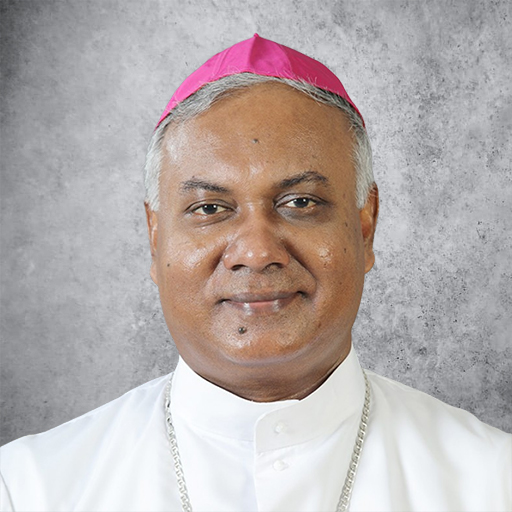
Bishop Selvister Ponnumuthan (May 8, 2009 – present)
The Diocese of Quilon, the first diocese in India and the cradle of Indian Christianity. The vibrant catholic community of Quilon (Kollam) cherishes its unique history of being founded by St. Thomas the Apostle of Jesus, nurtured by the great apostles St. Bartolommeo and St. Francis Xavier and fostered by the saintly martyrs like Archbishop Jordanus Catalani de Severac and Giovanni Marignoli. Since the latter half of the 12th century, Quilon became the centre of missionary expeditions by Franciscan and Dominican Missionaries. In 1329 Pope John XXII (in captivity in Avignon) erected Quilon as the first Diocese in the whole of Indies as suffragan to the Archdiocese of Sultany in Persia through the Apostolic Bull, “Romanus Pontifex” dated 9th August 1329. By a separate Bull “Venerabili Fratri Jordano”, the same Pope, on August 21, 1329 appointed the French Dominican friar Jordanus Catalani de Severac as the first Bishop of Quilon.
The Diocese of Quilon or Kollam is the first Catholic diocese in India in the state of Kerala. First erected on August 9, 1329 and re-erected on September 1, 1886. In a land area of 1,950 square kilometres, the diocese of Quilon comprises major part of the civil district of Kollam, the taluk of Karthikappally and portions of Mavelikkara and Chengannur. A small portion of Pathanamthitta district (Parumala) also falls within the diocese of Quilon. The current bishop is Rt. Rev. Dr. Paul Antony Mullassery.
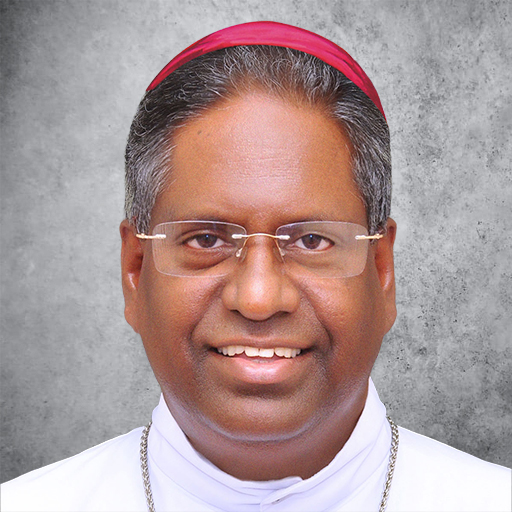
The diocese of Calicut, the 25th diocese of India was erected by an Apostolic Brief “Cum AuctusFideliumGrex”, dated June 12, 1923 of Pope Pius XI, by separating from the diocese of Mangalore that portion of the Malabar district and adding on to it the Wayanad Taluk, till then under the diocese of Mysore. Likewise the area west of the watershed of the Walluvabad Taluk, till then under the diocese of Coimbatore was added to the diocese. By a Decree of the Sacred Congregation of Propaganda Fide dated January 12, 1960, the Hosdurg Taluk, till then part of the diocese of Mangalore, was added to the diocese of Calicut. The extent, therefore, of the diocese may be described as the whole of the former Malabar district up to the ponnani river, part of Palakkad district and the area of the watershed of Valluvanad Taluk, with the addition of the present Hosdurg taluk on the north till Chandragiri river. With the appointment of Rt Rev. Dr Maxwell V. Noronha as the Bishop of Calicut, who took charge of the diocese on September 8, 1980, the administration of the diocese passed into the hands of the diocesan Clergy. On May 19, 2002 Rt Rev. Dr Joseph Kalathiparambil was appointed as the fifht Bishop of the diocese by the Holy See. On June 10, 2012, Bishop VergheseChakkalakkal took over the administration of diocese.
The diocese of Calicut was spread out to an area of 13051 Sq. Kms. in six revenue districts. In the context of such an extensive area there was the need of a new diocese for the benefit of the faithful. Bishop Maxwell Noronha, in consultation with the priests, religious and the laity requested the Holy See to establish a new diocese at Kannur.
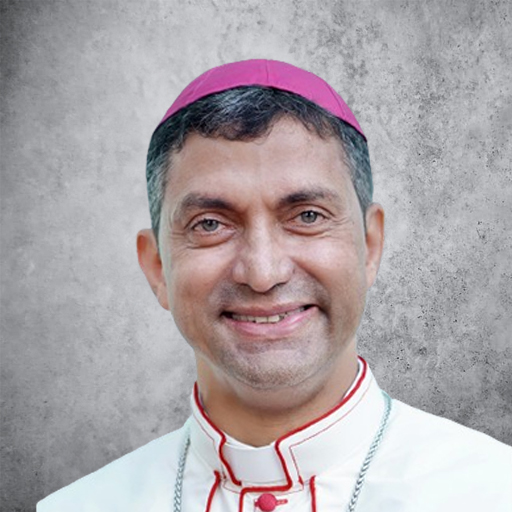
The Holy Father, Pope John Paul II by the Apostolic Brief, ‘cum ad aeternam’ dated 5th November 1998, created the Diocese of Kannur from the Diocese of Calicut. On the same day Rt. Rev. Dr. Varghese Chakkalakal who was a professor at St.Joseph’s Seminary, Mangalore, and a priest of the diocese of Calicut, was elected the Bishop of Kannur and the Bishop elect was consecrated on 7th February 1999 and he took charge of the diocese on 8th February 1999. The new Diocese consists of the Latin Catholics of Malabar residing in the revenue districts of Kannur and Kasaragod. On 1 February 2014, Pope Francis appointed Alex Joseph Vadakumthala as the new bishop of Kannur. He was consecrated on 23 March.
Holy Father Francis erected the diocese of Sultanpet, in Palakkad district, Kerala, on 28th December 2013. This new diocese was bifurcated from two civil States of Southern India: Tamilnadu and Kerala. In this new diocese there are twenty one parishes of Tamil speaking people and one parish of Malayalam speaking people from the diocese of Coimbatore and five parishes of Malayalam speaking people from the diocese of Calicut. This is the 12th Latin Catholic Diocese in the ecclesiastical region of Kerala. The new bishop Rev. Msgr. Antonysamy Peter Abir, a priest of the Archdiocese of Pondicherry-Cuddalore, was consecrated as the first bishop of this new diocese on 16 February 2014.
The Tamil Catholic people of this new diocese migrated some 250 years ago from the districts of Dindigul and Tiruchirapalli of Tamilnadu, a southern state of India. As Latin Catholics, they migrated to the Palakkad district and in particular, in the Kovilpalayam area, on account of livelihood and the war of Hyder Ali against the Britishers. At that time this area belonged to the Madras Presidency, having the same language of these migrants: Tamil until 1950 when this Palakkad district was added to the State of Kerala. Now, Malayalam is the official language of this district. However Tamil speaking people are recognized as a linguistic minority group.